dental practice no-show rate
Dental Practice No-Show Rate: Strategies to Boost Your Bottom Line

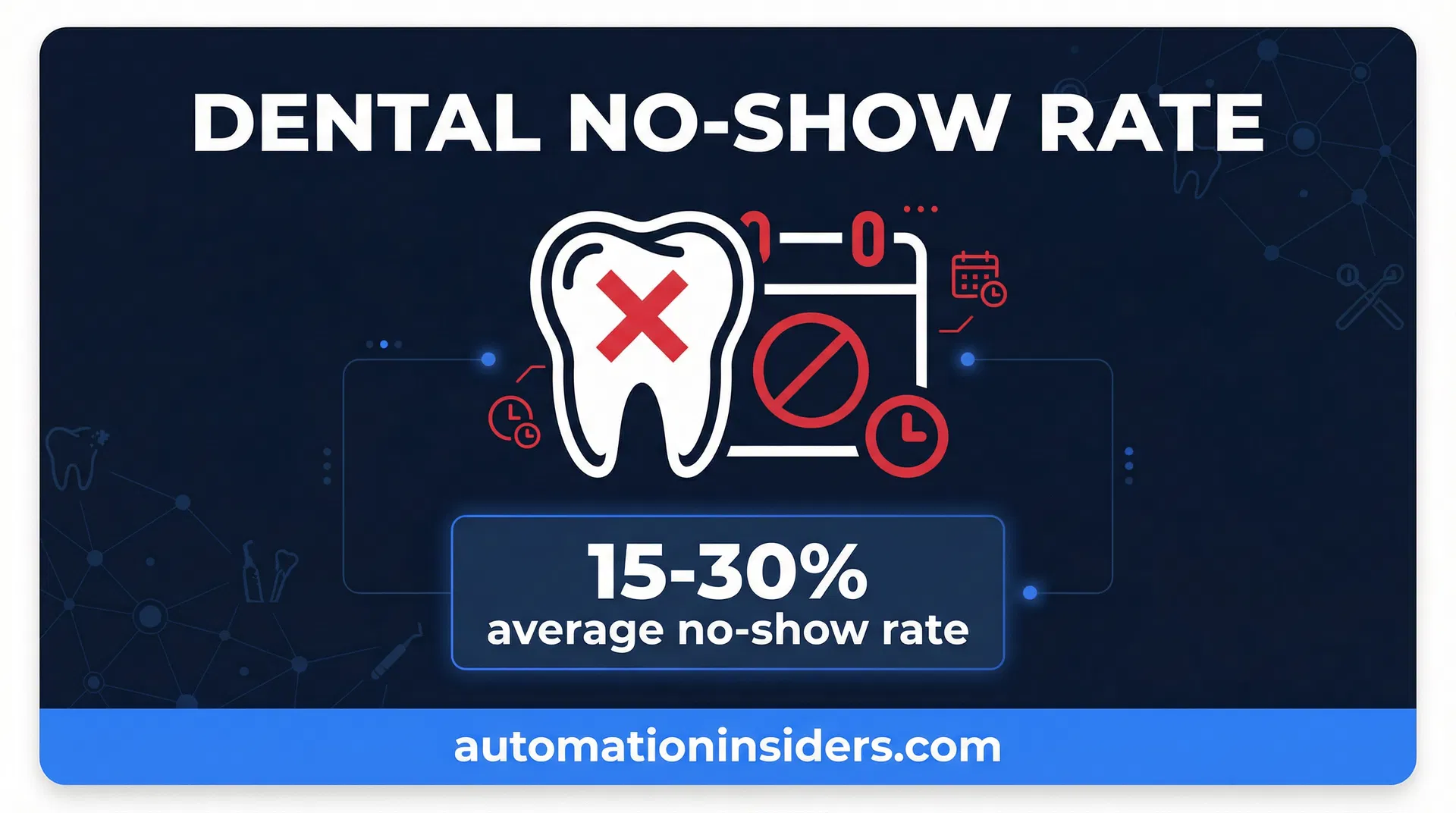
Your dental practice is losing money every day to missed appointments. It's not just an inconvenience; it's a silent drain on your bottom line, costing you hundreds of thousands of dollars annually. If you're a dental practice owner, you know the frustration of an empty chair and the ripple effect it has on your schedule, staff, and revenue. Understanding and aggressively tackling your dental practice no-show rate isn't just about efficiency; it's about safeguarding your financial health and ensuring your practice thrives.
The Silent Killer of Dental Profits: Understanding Your Dental Practice No-Show Rate
Missed appointments, commonly known as no-shows, are more than just a minor hiccup in your daily operations. They represent a significant challenge for dental practices, disrupting carefully planned schedules, wasting valuable staff time, and, most critically, leading to substantial revenue loss [1]. When a patient doesn't show up, that appointment slot isn't just empty; it's a lost opportunity that directly impacts your profitability.
Industry data consistently shows that dental no-shows typically range between 15% and 23% [1]. Let's put that into perspective for your business. Imagine your average appointment value is $250. If your practice schedules 20 appointments daily and experiences an 18% no-show rate, you're looking at approximately 3-4 missed appointments each day. That translates to $750-$1,000 in lost revenue daily. Over a month with 20 working days, that's $15,000-$20,000. Annually, your practice could be bleeding $180,000 to $240,000 due to no-shows. This isn't hypothetical; this is the reality for many practices, and it doesn't even account for the overhead costs that remain constant, like rent and salaries, or the lost opportunity to serve other patients. You need to take control of this situation.
Why Patients Ghost Your Dental Chair: Root Causes and Real Solutions
While general reasons for missed appointments exist, the dental industry faces unique challenges that contribute to its high dental practice no-show rate. You need to understand these specific drivers to implement effective countermeasures that actually work for your practice.
1. The "No Urgency" Factor: Long Booking Windows and Perceived Low Stakes
Dental appointments, especially routine check-ups and cleanings, often lack the immediate urgency of an emergency. Patients frequently book these months in advance—sometimes 3 to 6 months out. This extended lead time creates a significant window for life to happen: scheduling conflicts, forgotten appointments, or simply deprioritizing a cleaning when other commitments arise. A patient might think, "It's just a cleaning, I can always reschedule," without fully grasping the operational impact on your practice or the long-term health implications of delayed preventive care. This psychological aspect is a major contributor to your dental practice no-show rate.
So what? You need to bridge the gap between booking and appointment with consistent, value-driven communication. Don't let your patients forget why their appointment matters.
Actionable Step: Implement a multi-stage reminder system that starts weeks in advance and includes educational snippets about the benefits of their upcoming visit. For example, a text two weeks out could say: "Reminder: Your cleaning is coming up! Regular cleanings prevent cavities, gum disease, and keep your smile bright. We look forward to seeing you on [Date] at [Time]."
2. Dental Anxiety and Fear: A Powerful Deterrent
Dental anxiety and phobia are widespread issues that significantly contribute to no-shows. For many, the thought of a dental visit—whether due to past traumatic experiences, fear of pain, or discomfort with procedures—can be overwhelming. This anxiety often manifests as procrastination, leading patients to avoid confirming or simply not showing up. Even for routine visits, the apprehension can be strong enough to override the intention to attend. You must recognize that this isn't always a conscious decision to disrespect the appointment but rather a powerful emotional response that needs empathetic handling.
So what? Your practice needs to create an environment of trust and understanding, actively addressing patient fears before they lead to a no-show.
Actionable Step: Train your front desk staff to identify signs of anxiety during booking and initial calls. Offer a pre-appointment call to discuss concerns, or provide resources on managing dental anxiety. Consider a "comfort menu" for anxious patients, offering options like blankets, headphones, or even a brief tour of the operatory before their appointment. A practice in Scottsdale, Arizona, saw a 10% reduction in no-shows for anxious patients by implementing a dedicated "comfort coordinator" who proactively reached out to these patients.
3. Scheduling Conflicts and Life Changes: The Unpredictability of Life
Life is unpredictable. When appointments are made far in advance, the likelihood of unforeseen scheduling conflicts increases dramatically. Work commitments shift, family emergencies arise, or personal plans change. Without an easy and flexible way to communicate these changes and reschedule, patients often find it simpler to just not show up. This is particularly true for busy professionals or parents juggling multiple schedules. The friction involved in rescheduling, or the fear of cancellation fees, can sometimes push patients towards the path of least resistance: a no-show.
So what? Your practice's ability to adapt to these changes and offer convenient rescheduling options directly impacts your dental practice no-show rate. Make it easier to reschedule than to skip.
Actionable Step: Implement an online rescheduling portal or a system where patients can reply to a text message to request a new time. This empowers patients with control and reduces the administrative burden on your staff. For example, a text could offer: "Need to reschedule? Reply 'RESCHEDULE' or visit [YourWebsite.com/reschedule] to find a new time that works for you."
4. Lack of Perceived Value or Understanding: The Importance of Patient Education
Some patients may not fully appreciate the critical role of consistent preventive dental care in maintaining their overall health. They might view routine check-ups and cleanings as optional or only necessary when a problem, such as pain, arises. This lack of understanding about the long-term benefits of early detection and prevention can lead to a casual attitude toward appointments. If a patient doesn't see the immediate value, they are less likely to prioritize the visit, making them more susceptible to forgetting or canceling. The long-term health implications of delayed preventive care are significant, ranging from increased risk of cavities and gum disease to more serious systemic health issues like cardiovascular disease and diabetes, which have been linked to poor oral health.
So what? You need to consistently educate your patients on the direct link between oral health and systemic health, transforming their perception of dental visits from a chore into a vital investment in their well-being.
Actionable Step: During appointments, use simple analogies and visual aids to explain the long-term benefits of regular check-ups. Share success stories of patients who avoided major issues through preventive care. Send out monthly newsletters with engaging content about oral health tips and the importance of regular visits. A dental group in Austin, Texas, started showing short, animated videos in their waiting room about the link between oral health and overall health, which they attributed to a 5% increase in appointment adherence for new patients.
The True Cost of Missed Appointments in Dentistry: A Hard Look at Your Bottom Line
Beyond the immediate loss of revenue from a single missed appointment, the cumulative financial impact of a high dental practice no-show rate can be staggering. Let's break down the real cost with a worked example that hits home for your practice.
Consider a dental practice like yours with:
- Average appointment value: $250 (a realistic figure for many practices)
- Daily appointments: 20
- No-show rate: 18% (within the industry benchmark of 15%-23% [1])
- Working days per month: 20
Daily Loss:
- Number of no-shows per day: 20 appointments * 18% = 3.6 no-shows (let's round to 4 for a realistic scenario)
- Revenue lost per day: 4 no-shows * $250/appointment = $1,000
Monthly Loss:
- Revenue lost per month: $1,000/day * 20 working days = $20,000
Annual Loss:
- Revenue lost per year: $20,000/month * 12 months = $240,000
This example isn't just numbers on a page; it's a quarter of a million dollars that could be reinvested into your practice, used for staff bonuses, or simply boosting your personal income. This doesn't even account for the ripple effects, such as wasted staff wages, reduced productivity, and the inability to schedule other patients who could have filled those slots. The economic impact extends to overhead costs that remain constant regardless of patient volume, such as rent, utilities, and salaries. This is why effectively managing your dental practice no-show rate is paramount for your profitability and peace of mind.
Actionable Strategies to Reduce Your Dental Practice No-Show Rate
Reducing your dental practice no-show rate requires a multi-faceted approach that combines proactive communication, clear policies, and patient education. Here are 5 specific, actionable strategies tailored for your dental practice:
1. Optimized Reminder System with Multi-Channel Communication
Given that many dental appointments are booked far in advance, a robust reminder system is critical. You can't rely on a single reminder. Implement a multi-channel approach that hits patients where they are:
- Immediate Confirmation (Email/Text): As soon as a patient books, send an email or text confirming all appointment details. This reinforces the booking and provides a reference point. "Thanks for booking with [Your Practice Name]! Your appointment is confirmed for [Date] at [Time]. We look forward to seeing you!"
- Two Weeks Prior (Email/Text with Value Add): A gentle reminder that the appointment is approaching. This is a great time to include a link to patient forms that can be filled out in advance, reducing in-office wait times and showing you value their time. "Just a friendly reminder about your upcoming dental visit on [Date] at [Time]. Save time by completing your forms online here: [Link to Forms]."
- 3-5 Days Prior (Text/Email with Confirmation Request): This is your crucial reminder. Ask for a confirmation reply (e.g., "Reply Y to confirm, N to reschedule"). This proactive engagement helps you identify potential no-shows early, allowing you to fill the slot. "Your appointment with Dr. [Dentist's Name] is on [Date] at [Time]. Please reply Y to confirm or N to reschedule."
- 24-48 Hours Prior (Text/Call): Your final reminder. For patients who haven't confirmed, a personal phone call can be highly effective in addressing any last-minute issues or confirming attendance. For patients with known anxiety, a reassuring tone can be beneficial. "Hi [Patient Name], this is [Your Practice Name] reminding you of your appointment tomorrow at [Time]. Please call us at [Phone Number] if you have any questions."
Message Tone: Keep messages professional yet friendly. Avoid overly clinical language. Personalize messages where possible, using the patient's name. A practice in Portland, Oregon, reduced its no-show rate by 7% simply by humanizing its reminder texts.
2. Clear and Empathetic Cancellation Policy
Your cancellation policy should be clear, concise, and communicated effectively at the time of booking and in reminders. However, in dentistry, empathy is key. While a fee for late cancellations or no-shows can be a deterrent, consider offering a grace period or a one-time waiver for long-standing patients or in cases of genuine emergencies. The goal is to encourage communication, not to penalize patients unnecessarily. Clearly explain the impact of missed appointments on your practice and other patients. The best approach is to be firm but understanding.
Actionable Step: Create a one-page, easy-to-understand cancellation policy document. Have new patients sign it, and include a brief summary in all appointment reminders. For example, "Please notify us at least 24 hours in advance if you need to cancel or reschedule to avoid a cancellation fee and allow us to offer your time to another patient."
3. Patient Education on Oral Health Importance
Address the "no urgency" factor by consistently educating patients on the importance of preventive dental care. During appointments, explain the long-term benefits of regular check-ups and cleanings, and the potential consequences of delaying treatment. Use visual aids or simple analogies to make complex information understandable. When patients understand the value, they are more likely to prioritize their appointments. This also helps in reducing your dental practice no-show rate by fostering a sense of responsibility.
Actionable Step: Develop a series of short, engaging educational videos or infographics for your waiting room or social media. Focus on topics like "The Hidden Dangers of Skipping Your Cleaning" or "How Oral Health Impacts Your Heart." Offer a quick, personalized summary of their oral health status and the benefits of their next visit at the end of each appointment.
4. Streamlined Rescheduling Process
Make it incredibly easy for patients to reschedule if a conflict arises. A cumbersome rescheduling process is a direct path to a no-show. You need to offer multiple, convenient options to convert a potential no-show into a rescheduled appointment.
Actionable Step: Provide a direct phone number, an online portal, or even a reply option to a text message. Consider integrating a "Reschedule Now" button directly into your email reminders that links to your online booking system, showing real-time availability. This empowers patients and significantly reduces the administrative burden on your staff.
5. Building Strong Patient Relationships: Fostering Trust and Accountability
Beyond transactional interactions, cultivating genuine relationships with patients can be a powerful deterrent to no-shows. Patients are far less likely to miss an appointment with a practice where they feel valued, heard, and connected. This involves more than just clinical excellence; it encompasses the entire patient experience, from the warmth of your front desk staff to the empathetic chairside manner of your dental team. Remembering personal details, engaging in friendly conversation, and demonstrating genuine care can transform a patient's perception of their dental visit from a chore into a valued interaction. This personal connection fosters a sense of accountability, making patients more inclined to honor their commitments or, at the very least, communicate if they need to reschedule. A strong patient-practice bond is the most often-underestimated factor in reducing your dental practice no-show rate.
Actionable Step: Implement a system for staff to note personal details (e.g., "patient mentioned their child's soccer game") to bring up during future visits. Send personalized birthday greetings or holiday cards. Encourage your team to spend an extra minute building rapport with each patient. A small dental office in rural Georgia saw its no-show rate drop by 15% after actively focusing on building deeper personal connections with every patient.
GoHighLevel: Automating Your Way to Fewer Dental No-Shows
Implementing these strategies manually can be time-consuming and prone to human error. This is where automation platforms like GoHighLevel become invaluable for dental practices looking to significantly reduce their dental practice no-show rate. GoHighLevel offers a comprehensive suite of tools designed to streamline patient communication and appointment management, making your practice more efficient and your patients more engaged.
Here's how GoHighLevel directly addresses the no-show problem for your business:
- Automated Multi-Channel Reminders: GoHighLevel can automate your entire reminder sequence across SMS, email, and even voicemail drops. You can customize the timing, frequency, and content of these reminders, ensuring patients receive timely nudges without manual effort. This significantly reduces forgetfulness, a primary cause of dental no-shows. You can set up a workflow in the 'Automation' section to trigger these reminders automatically.
- Two-Way Communication: The platform facilitates two-way communication, allowing patients to confirm, reschedule, or cancel appointments directly through text or email replies. This ease of interaction reduces friction and encourages patients to communicate changes rather than simply not showing up.
- Automated Rescheduling Links: Integrate direct links within reminders that allow patients to reschedule their appointments online, viewing available slots in real-time. This empowers patients and reduces the administrative burden on your staff, freeing them up for more critical tasks.
- Patient Engagement Workflows: Beyond reminders, GoHighLevel can create automated workflows for patient onboarding, post-appointment follow-ups, and recall campaigns. These help build stronger patient relationships and reinforce the value of regular dental care, directly addressing the lack of perceived value. By leveraging GoHighLevel, your practice can proactively manage its dental practice no-show rate and ensure a fuller, more profitable schedule.
Reclaiming Your Schedule and Revenue: The Path Forward
Your dental practice no-show rate is a formidable challenge, but it is not an insurmountable one. By understanding the unique reasons why dental patients miss appointments, calculating the true financial impact, and implementing strategic, actionable solutions, your practice can significantly reduce its no-show rates. Leveraging automation platforms like GoHighLevel further amplifies these efforts, transforming a reactive problem into a proactively managed aspect of your practice.
Don't let missed appointments erode your practice's profitability and efficiency any longer. Take control of your schedule and revenue by implementing these strategies today. For a deeper dive into industry benchmarks, explore our comprehensive article on Appointment No-Show Rate Benchmarks by Industry. And to further optimize your reminder system, consult our Automated Reminders Guide.
Ready to quantify the impact of no-shows on your practice and discover how GoHighLevel can help? Use our free No-Show Cost Calculator to see how much missed appointments are truly costing you, then explore a free trial of GoHighLevel to put these solutions into action.
References
[1] Alabdulkarim, Y. (2022). Predicting no-shows for dental appointments. PMC - NIH. Retrieved from https://pmc.ncbi.nlm.nih.gov/articles/PMC9680883/
Affiliate Disclosure: I am an independent HighLevel Affiliate, not an employee. I receive referral payments from HighLevel. The opinions expressed here are my own and are not official statements of HighLevel LLC.
Related Articles
Stop the Bleeding: How GoHighLevel Transforms Dental Office No-Shows and Scheduling
Dental practices lose thousands to no-shows. Discover how GoHighLevel dental office no-shows scheduling can cut rates by 50%, streamline operations, and boost your revenue.

Chiropractic No-Shows: Costs & Fixes
Reduce your chiropractic appointment no-show rate. Uncover hidden costs, root causes, and actionable strategies, including GoHighLevel automation, to boost patient retention and practice profitability.
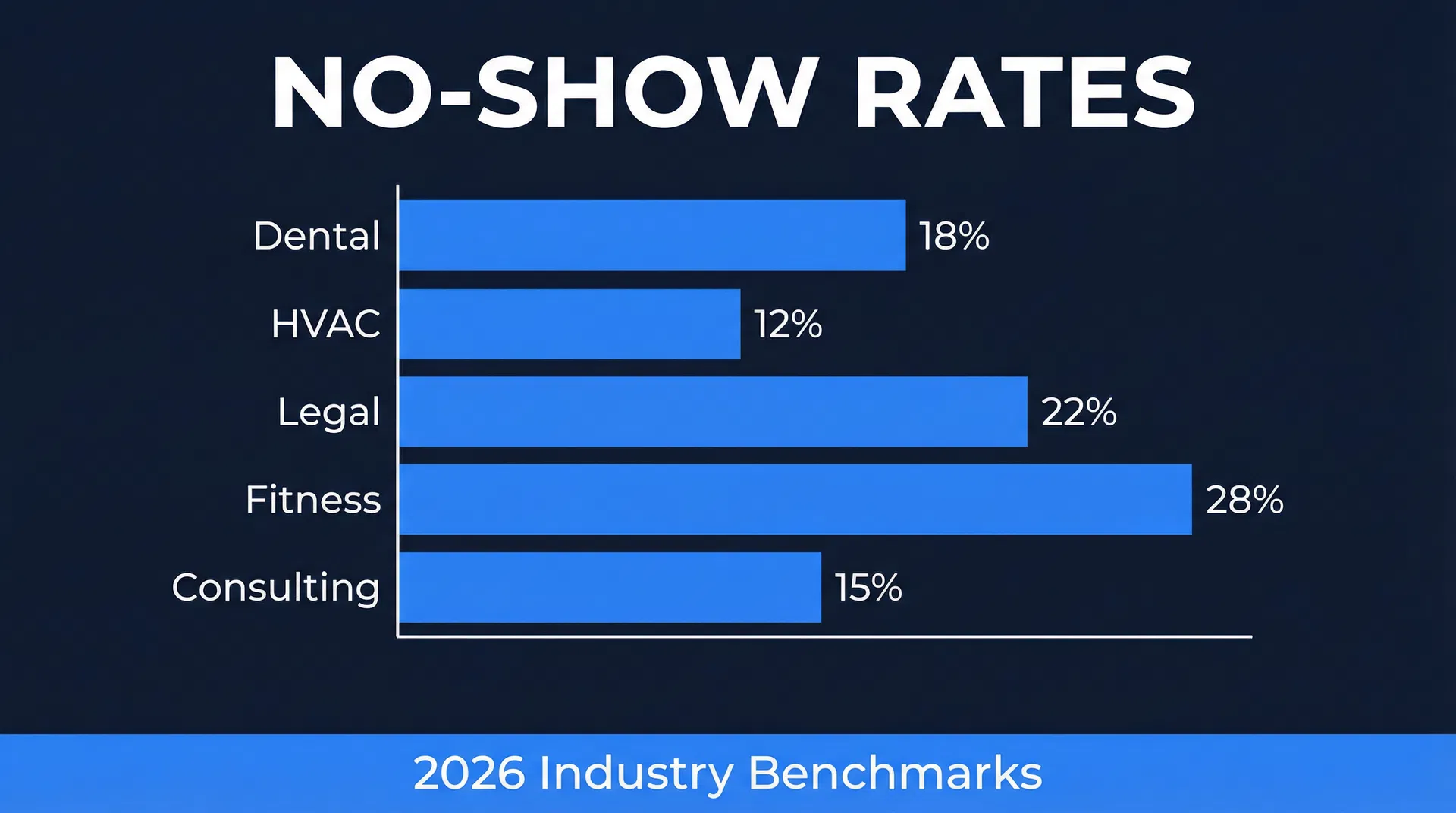
No-Show Rate Benchmarks by Industry [2026]
What is a good no-show rate? See industry benchmarks for dental, HVAC, legal, fitness & more — and how automated reminders cut no-shows by 40%.